Mid-June is when the Australian running calendar quietly flips its poles. The southern states pull on gloves and headtorches for the shortest days of the year, while everything north of the Tropic of Capricorn opens for business: the Kimberley dry season locks in, the Red Centre drops to running temperature, and Queensland stages the biggest fortnight of road racing in the country. If you live in Melbourne or Hobart it can feel like the off-season. It is actually the opposite — you just have to know where to look.
The next six weeks contain more variety than any other stretch of the year. There is a city marathon with 42,000 entries and a 2:07 course record. There is a marathon run on a beach, timed around the tide chart. There are two desert races a day apart — one packaged with sunrise tours at Uluru, one run on the red dirt that doubled for the apocalypse in Mad Max 2. There is a hundred-miler that finishes at a footbridge in front of Adelaide Oval, and a trail run in Tasmania capped at one hundred entrants total.
What links them is winter itself. Cool mornings, stable weather and low humidity are the conditions distance running was built for, and Australia gets its best supply of them between now and the end of July. Some of these races will be gone from the entry portals within days; others will quietly sell through their caps weeks out. Here is what is worth your entry fee right now, and who each race actually suits.
The fastest weekend in Australian running
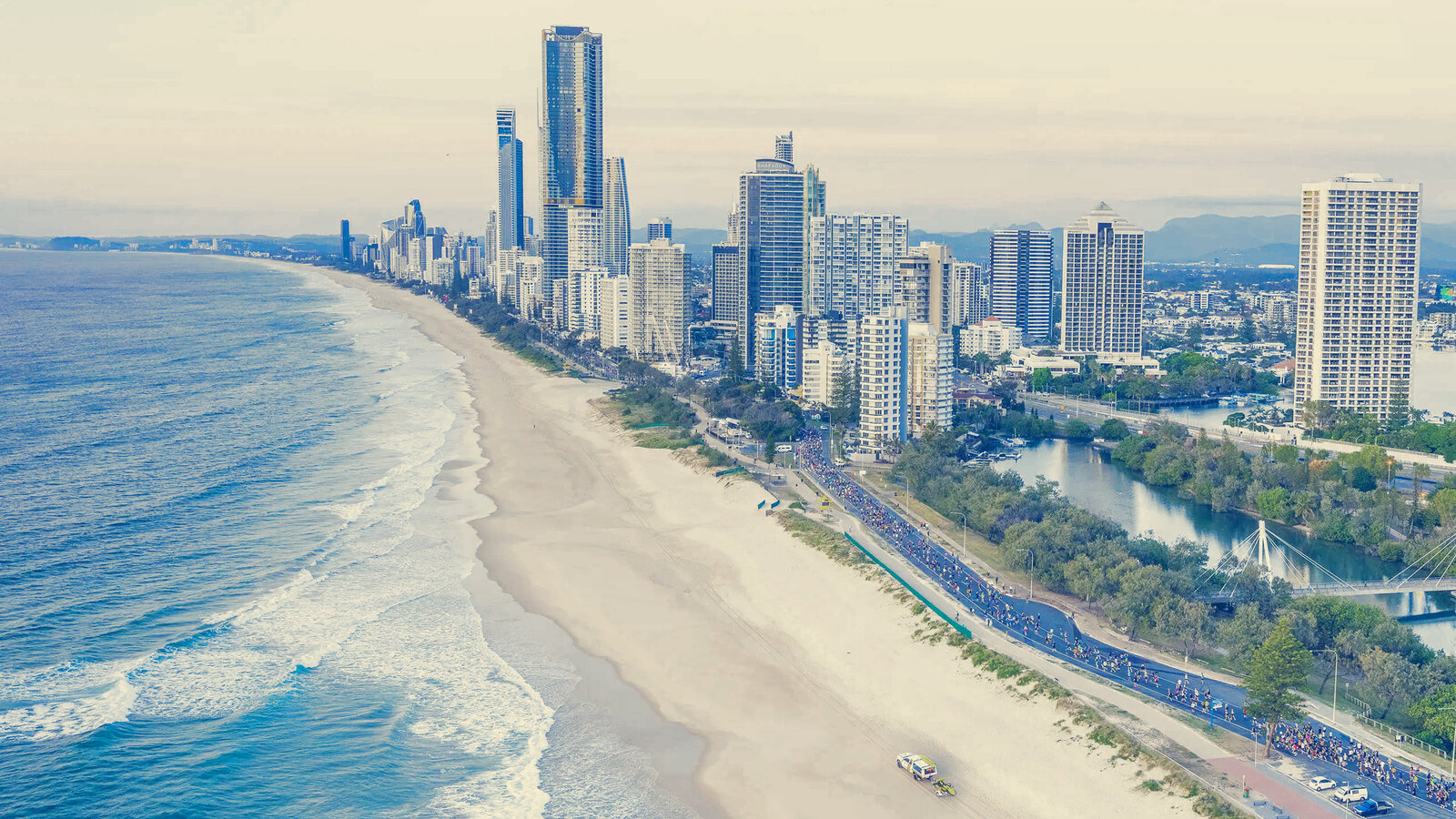
The ASICS Gold Coast Marathon (4–5 July) is the event everything else this winter is measured against, and the numbers this year are genuinely new territory: entries passed 42,000 with two months still on the clock, a record in the race's 46-year history. For context, the 2025 edition put more than 15,000 runners in the flagship marathon and another 10,000 in the China Airlines Half Marathon, drew entrants from close to fifty countries, and was just named Queensland Sports Event of the Year over a field that included the World Surf League.
The reason for all of this is boring and wonderful: the course is flat, the air is cool, and people run fast here. The route is an out-and-back along the coastal strip — start and finish at Southport's Broadwater Parklands, south past Broadbeach and Burleigh, back north along the water — with barely a rise worth naming. July mornings on the Gold Coast start around ten degrees and stay dry. The course records tell the story better than any brochure: Yuki Takei's 2:07:33 from 2025 and Yuki Nakamura's 2:24:22 are both recent, and both Japanese — a thread that runs deep here, since Japanese elites and age-groupers have treated the Gold Coast as their winter marathon of choice for decades. Andy Buchanan's 1:01:08 in last year's half is arguably the sharpest mark on the books.
This is the race for a personal best, a first marathon, or a Good For Age qualifier — the event runs its own qualifying program, and pace groups blanket every plausible finish time. It is emphatically not the race for anyone who wants solitude: you will run every kilometre inside a crowd, and accommodation near Southport is already tightening. For the genuinely greedy there is the Fixx Gold Coast Double — the half on Saturday and the marathon on Sunday, 63.3km for one medal collection. If you want the fast version of winter running, this is it; if the thought of 42,000 people makes you itch, the rest of this article is for you.
A marathon scheduled by the tide chart
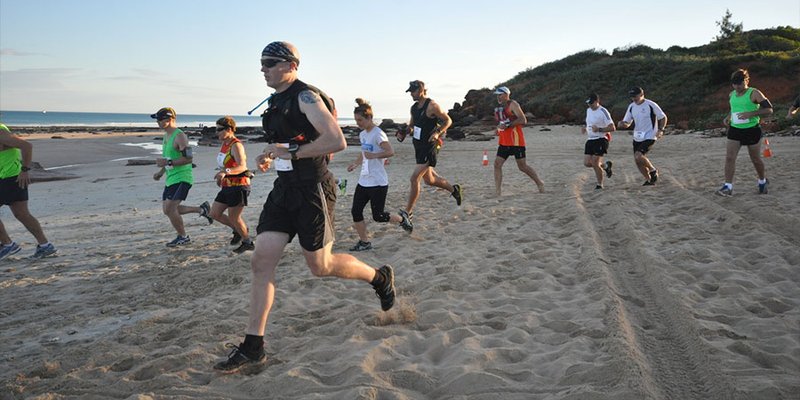
On the same weekend, four thousand kilometres away in the opposite corner of the continent, the Broome International Airport Marathon (5 July) runs an out-and-back along Cable Beach — on the beach itself, on the hard-packed sand below the high-water line. The start time isn't set by television schedules; it's set by the tide. Get the window right and Cable Beach at low tide is one of the firmest, flattest running surfaces anywhere, twenty-two kilometres of it stretching north toward the Dampier Peninsula. Get your line wrong on the day and you'll learn quickly why locals watch the water's edge.
July is the heart of the Kimberley dry season: dawn around thirteen degrees, cloudless by mid-morning, the ocean on your left both ways. The field is small — this is a community event run a long way from anywhere, with a regional airport as naming sponsor, which tells you something about both the town and the race's sense of humour. Expect a few hundred runners across the marathon, half and 10.5km Dash, and expect to share the beach with the occasional camel train heading out for the morning tourist run.
This one suits collectors of strange and beautiful marathons, and anyone who was already planning a Kimberley winter trip — race entry is the cheapest part of getting to Broome, so build the holiday first. It does not suit runners chasing a time: even firm sand gives back a little less than bitumen with every step, and there's no pace group to hide in. As a pair, Gold Coast and Broome on the same weekend are a neat summary of how wide Australian running actually is.
The race you can't enter without booking the holiday too
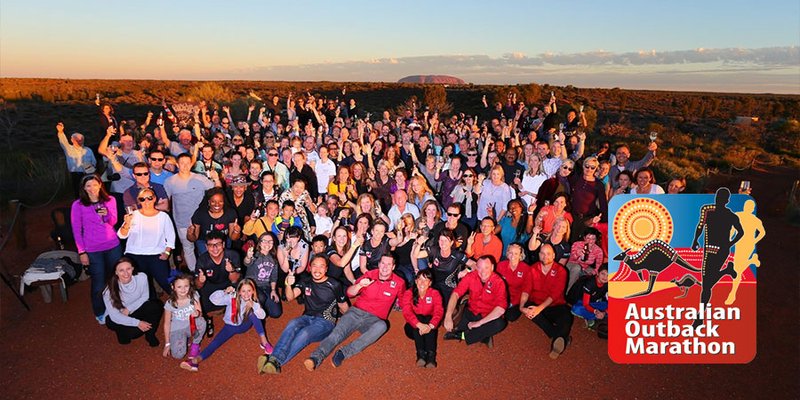
The Australian Outback Marathon (25 July) is held on the last Saturday of July every year on the red-sand tracks around Yulara, with Uluru on one horizon and Kata Tjuta on the other. The course is mostly flat but honest: unsealed roads, bush tracks and stretches of soft red sand that turn a four-hour marathoner into a four-and-a-half-hour one, with a couple of dune crests that exist purely for the view.
Here's the detail that surprises people: you cannot simply enter this race. Entry comes bundled into a multi-day package — flights or transfers, accommodation at Yulara, a sunrise viewing of Uluru, a guided base walk, a carbo-loading dinner and a celebration dinner under the desert sky. That structure shapes the whole event. The field is heavily international, the atmosphere is closer to a touring festival than a local fun run, and everyone you meet at breakfast is there for the same week-long experience rather than dashing in for a Saturday start.
That makes it an easy race to position. It suits runners who want the run woven into a once-in-a-lifetime trip to the Centre — especially internationals and anyone ticking off the genuinely remote races. It does not suit budget travellers, time chasers, or anyone who resents paying for dinners they didn't choose. July is the right month for it: desert mornings near five degrees, daytime in the low twenties, and the kind of light that makes every finisher photo look staged. If you want the Red Centre on your own cheaper terms, read on — Broken Hill is a day later and a very different proposition.
Red dirt, fury road: Broken Hill leans all the way in
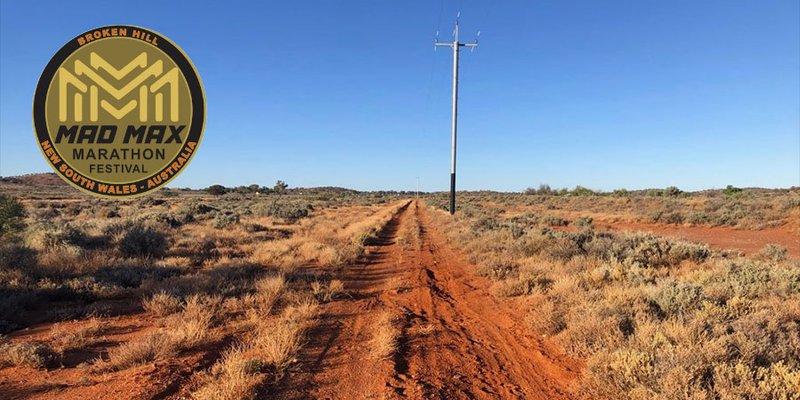
The Mad Max Marathon Festival (26 July) is the other desert race of the fortnight, and it wears its name honestly. Broken Hill's far-west moonscape — saltbush plains, mullock heaps, a single power line running to the horizon — is the country where George Miller shot Mad Max 2, out at Silverton and the Mundi Mundi plateau just up the road. The festival leans into the inheritance: costumes are openly encouraged, and the start line reliably features more shoulder pads and dust goggles than any other marathon in the country.
Underneath the dress-ups is a proper bush running festival on red-dirt tracks, with everything from a 2km kids' racecourse dash through 5km, 10km run and walk options, the half, and the full marathon. Winter is the only sane time to do it — far-west mornings start around four degrees and the days top out clear and mild, which by Broken Hill standards is luxury. The event's beneficiary is the detail worth knowing: proceeds go to Maari Ma Health Aboriginal Corporation, which delivers health services across far western NSW, so the entry fee does real work in the region you're running through.
This race suits runners who think a marathon should come with a story and don't mind dirt underfoot, plus anyone within striking distance of the far west looking for their winter goal race. It is not for PB hunters or anyone who needs their event infrastructure polished — this is a country town doing it for the right reasons. Against the Outback Marathon a day earlier, the choice is clean: Yulara is the curated, packaged desert; Broken Hill is the DIY one, at roughly a tenth of the cost.
Start in the hills, finish at the Oval

Ultra Adelaide (11 July) has the smartest course design of any winter ultra in the country: every distance is a point-to-point that ends in the same place, at the footbridge over the River Torrens in front of Adelaide Oval. The organisers bus you out to your start line — Kuitpo Forest for the longest options, with the routes threading the Heysen Trail through Mount Lofty, Cleland, Morialta and Black Hill before dropping down the Torrens into the city. Five distances run from a 21km to the full 100-miler, and because every step points home, the psychology does half the pacing for you.
A July ultra in the Adelaide Hills means real winter trail running: mud in Kuitpo's pine plantations, fog on the Mount Lofty summit, maybe ten hours of usable daylight, and a guaranteed headtorch start or finish for anyone past the 50km. That sounds like a warning, but it's most of the appeal — this is the closest the state gets to a proper northern-hemisphere-style winter mountain race, with eucalyptus instead of alpine huts. Cut-offs are deliberately generous and the event openly welcomes hikers and walkers on the shorter courses, which keeps the back of the field sociable rather than desperate.
It suits trail runners who want a serious winter objective without flying to Tasmania or waiting for spring, and first-time ultra runners who'll benefit from forgiving cut-offs and a city finish where family can actually meet them. It doesn't suit road runners expecting runnable gradients throughout — the Heysen through Cleland and Morialta is rocky, stepped and slow — and the midnight start for the long distances is its own filter. Finishing an ultra under lights beside Adelaide Oval, though, is a finish-line image no other Australian ultra can offer.
One hundred runners get the whole peninsula
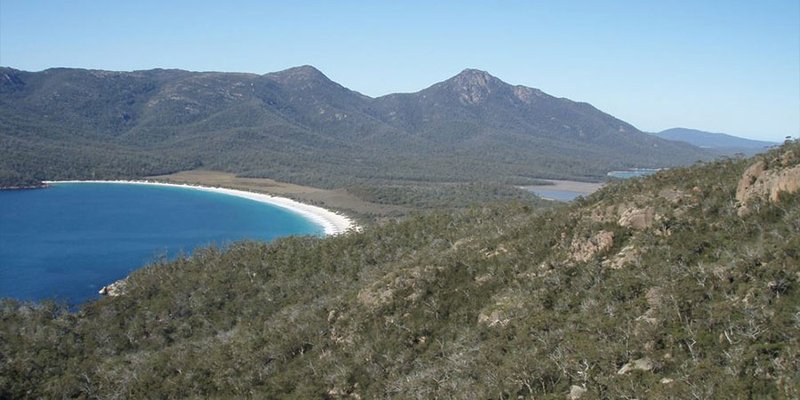
At the other extreme of field size, the Freycinet Circuits Trail Run (21 June) caps its entire event at one hundred participants. That's not a marketing flourish — it's a national parks condition, and it means the experience is closer to a guided long run with mates than a race. Two circuits are on offer: an 11km loop over the saddle of the Hazards to Wineglass Bay and back along Hazards Beach, and the full 29km circuit that continues south over Mt Graham to Cooks Beach before swinging home up the peninsula's western shore.
The terrain is the draw. Freycinet's pink granite drains instantly, so even in midwinter the track stays honest while mainland trails are ankle-deep in mud — Tasmania's east coast is its dry side, and June days here are often still, cold and absurdly clear. Running the Mt Graham circuit in winter means looking down on Wineglass Bay's full curve with nobody on the sand below; the tour boats are thin, the campgrounds are empty, and a hundred runners dissolve into forty kilometres of coastline almost immediately.
It's run by Endorfun, whose Tassie trail series has a deserved reputation for low-key, well-marked events that sell out on word of mouth — with a hundred-person cap, this one moves fast, and the race is next weekend as this article goes live. It suits trail runners who'd trade aid stations and crowds for silence and granite, and 29km is a legitimate winter test with around a thousand metres of climbing. It doesn't suit anyone who needs a crowd to pull them along, and the cap means there's no entering on a whim in race week. If you miss it, the series continues across the island — but this is the headline course.
The shortest day deserves a party
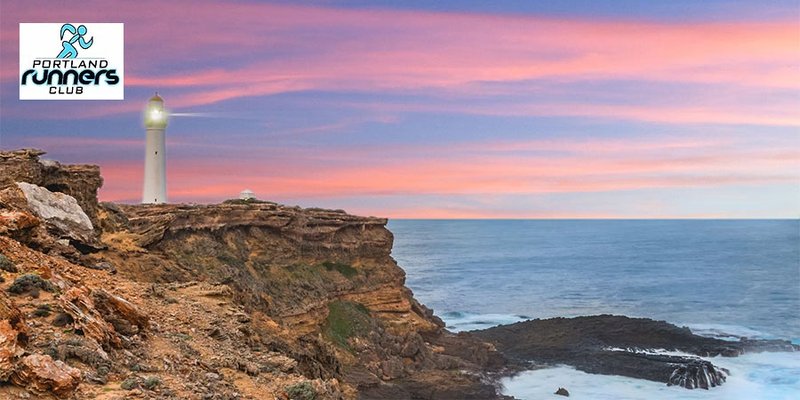
The same Sunday, on the far south-west coast of Victoria, the Portland Runners Club stages its Winter Solstice Fun Run (21 June) — a deliberate celebration of the year's shortest day rather than an apology for it. The clever part is the menu. The 25km takes in trails of the Great South West Walk, the long-distance loop that is Portland's best-kept secret; the 15km runs point-to-point from the Cape Nelson lighthouse back into town along the cliffs; a 9km loops Fawthrop Lagoon and the foreshore; and the Irish Mad Mile dashes through the middle of town for anyone whose training has consisted mainly of optimism.
This is a volunteer club event in the best tradition: entry fees that look like a typo next to the big-city festivals, a carnival finish line with food and music, and courses that exist because club members actually train on them. Portland in late June is cold, frequently wild, and dramatic in the way only the Southern Ocean coast can be — if a front comes through on the 15km, the lighthouse-to-town run becomes genuinely memorable; if it's still, the winter light along those cliffs is the best of the year.
It suits families, club runners, and anyone within a few hours' drive who wants to mark the solstice with something other than complaining about it — the spread from one mile to 25km genuinely covers a household. It's not a destination race in the flying-in sense, and it isn't trying to be. But as a piece of running culture — a small town turning the worst day of the calendar into its best morning — it earns its place on this list ahead of bigger events. The days get longer from here; Portland just starts the celebration on time.
The thing this fortnight makes obvious is that Australian running doesn't really have an off-season — it has a migration. The same weekend sends 42,000 people down a Queensland highway and a few hundred along a Kimberley beach, and a fortnight later splits the desert between a packaged festival at Uluru and a costume party in Broken Hill. None of these events is trying to be the others, and that's precisely what makes the winter calendar worth reading closely instead of hibernating through.
Pick by the experience you're short of, not the one you're used to. If you've never raced inside a real crowd, the Gold Coast will recalibrate what a start line feels like. If you've never heard your own footsteps for three hours, Freycinet will. Winter gives you both inside six weeks, which is a better deal than any spring can offer.