October is when Australian running gets greedy. September is still cautious — you race, but you keep an eye on the forecast. By October the southern states have settled into reliable spring, Tasmania has stopped freezing overnight, the Queensland hinterland has not yet turned into a sauna, and Western Australia is enjoying the few weeks where the Southern Ocean coast is both green and warm enough to spend three consecutive days running along it. For about five weeks, almost nowhere in the country is a bad place to race.
The calendar reflects that confidence. This is the month organisers put on the things that need good weather to work: multi-day stage races, hundred-kilometre trail events with generous cut-offs, a 35km walk across a capital city, road races that have been running since the mid-eighties and expect a fast field. Nothing on this list is hedging. October is also when a lot of runners discover that the base they built over winter has an expiry date — spring racing is the last honest window before the summer heat turns everything into a maintenance exercise.
Six races follow, from 11 October to 25 October, one each in Victoria, Queensland, South Australia, Western Australia, New South Wales and Tasmania. They range from a first-edition regional festival that did not exist last year to a road ten-kilometre that has been held annually since 1985. Two of them are not really running races at all, and both are on the list deliberately: one is a walk, and one is built around the idea that a race need not assume you are running on two legs. Between them they cover about as wide a definition of the sport as a single month can hold.
A brand-new festival is a gamble worth taking when the organiser has done it eleven times before
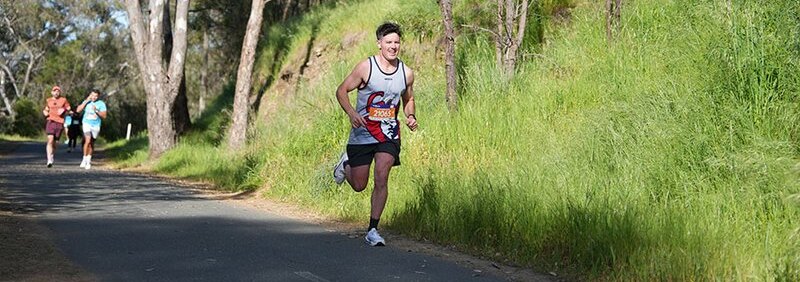
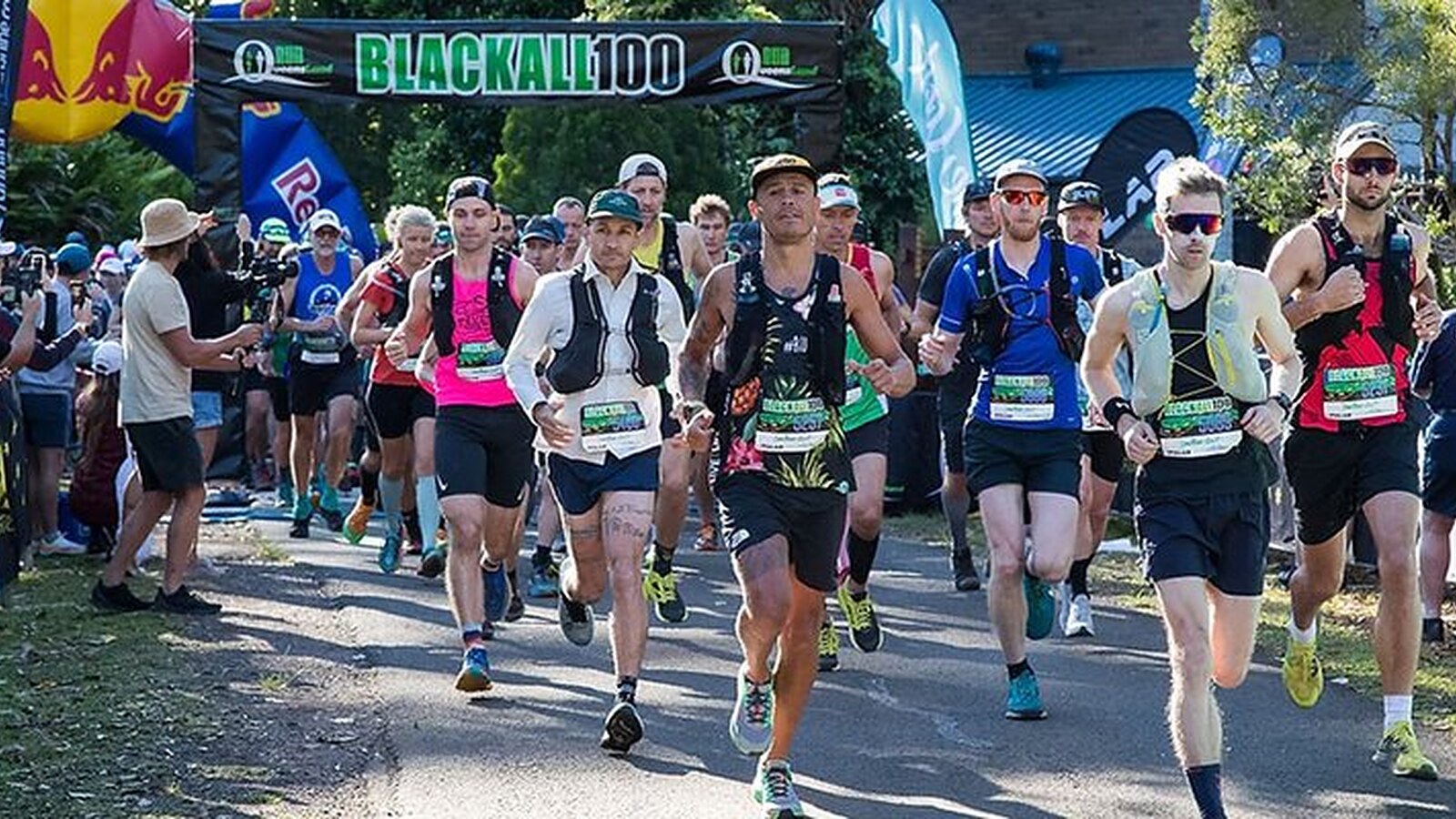
Entering the first running of anything carries a risk that experienced racers learn to price: the course measurement is untested, the aid stations are guesses, and nobody knows yet where the bottleneck will be. The Active Foot Clinic Wodonga Running Festival on 11 October is a first edition — but it is a first edition run by Race Hub Australia, who already stage sixteen of these across four states, from Parramatta to Kedron to the River Torrens. The template is proven even if this particular course is not.
The festival runs out of Willow Park on the Wodonga side of the Murray, using the path network between there and Gateway Island — the flat, sealed, river-flat corridor that locals use for exactly this kind of running. There are four options: a half marathon at 8:00am, the 10km at 8:20am, the 5km at 10:00am and a 2km Family Dash at 10:30am, priced at $115, $75, $60 and $35. Everyone in the half, 10km and 5km gets a Fractel cap, which the organisers value at $70 and which is a genuinely unusual piece of merchandise to include rather than a branded drawstring bag.
The border-town setting is the thing that makes this more interesting than its distances suggest. Albury-Wodonga has a real running culture that gets very little national attention, and October on the upper Murray is close to ideal — cool mornings, no humidity, and none of the wind that makes spring racing in Melbourne a coin toss. Race Hub already runs an Albury Running Festival on the New South Wales side of the same river; adding Wodonga means the region now has two.
Who should enter: someone in north-east Victoria or the Riverina who has been driving three hours to Melbourne to race, and anyone chasing a flat, honest half marathon time in reliable weather. Who should not: a runner who wants elevation, trail, or the atmosphere of a big-city event. This is a regional festival on river paths, and the first edition of one at that. What it offers instead is a course that will not fight you and a field small enough that you will not spend the first two kilometres boxed in.
Queensland's hundred is a Western States qualifier, and it starts with a smoking ceremony
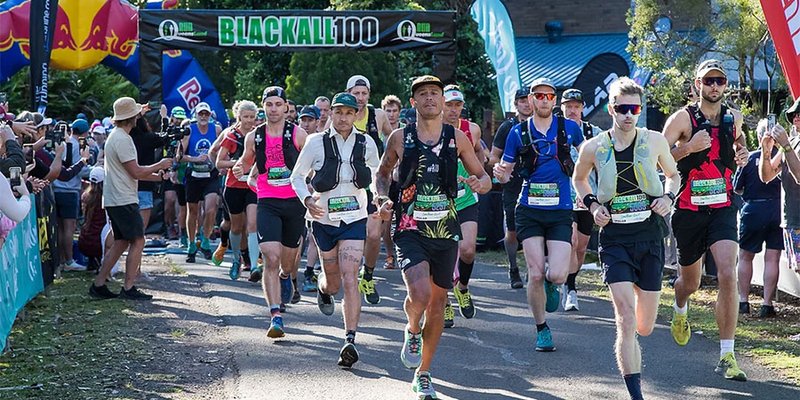
The Blackall 100 on 17 October follows the Sunshine Coast Hinterland Great Walk out of Mapleton, and its 100km is a qualifying event for the Western States Endurance Run — which is the detail that changes who turns up. A WSER qualifier attracts people with a specific, unglamorous goal: get the finish, get the ticket, do not blow up. That tends to produce a more measured field than a race chasing course records, and it is one reason Blackall has a reputation for being hard without being cruel.
Three distances share the hinterland: 100km at 6:00am for $480, 50km at 6:30am for $320, and a 21km at 7:15am for $225. The terrain is Sunshine Coast rainforest and open ridgeline — towering forest, deep gullies, and long sections where the view changes every few hundred metres as the track swings around a spur. The organisers make a point of the generous cut-offs, which is not marketing softness; on a course with this much climbing, a tight cut-off would simply convert the event into a race for the front third of the field.
The part worth knowing before entering is that the weekend opens on the Friday night with an Indigenous smoking ceremony honouring Country, held at the QCCC Mapleton race hub before anyone runs a step. It is not a token addition tacked onto a start list — it sets the tone for a weekend the organisers have deliberately built around being somewhere rather than just racing there, with onsite accommodation packages, food at the hub, and a village that stays busy long after the fast runners have finished.
This suits an ultra runner who wants a hundred with a real qualification attached and a supported, sociable base camp rather than a car park at dawn. It suits a first-time 50km runner too, given the cut-offs. It suits nobody looking for a fast time — this is a hinterland trail with sustained climbing, and the honest comparison is not with a road hundred but with the harder end of Australian trail ultras. Run Queensland, who put it on, also run the Cobb & Co Backyard Ultra and the Rainbow Beach festival, so the operational side is well practised.
Thirty-five kilometres across Adelaide, on foot, at walking pace
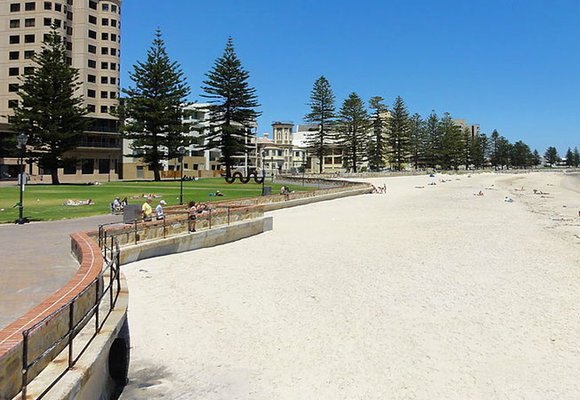
Runners are often dismissive of walking events, which is a mistake best cured by attempting one. The Bloody Long Walk Adelaide on 18 October covers 35km from the grounds of Carrick Hill House in the foothills, past the Botanic Gardens and the Zoo, down the length of the River Torrens to the coast, out to Henley Beach and along the sand-side path to finish at Glenelg. Walked rather than run, that is most of a day on your feet, and the failure mode is not fitness but the soles of your feet.
It exists to raise money for the Mito Foundation, which funds research and support for mitochondrial disease — a group of genetic conditions that disable the cells' ability to produce energy, and which often present in children. The connection to the format is not incidental. An event about the body running out of energy over 35km is a reasonably direct piece of symbolism, and the organisers do not belabour it.
The course is the strongest argument for entering. Most capital-city endurance events loop a park or run out and back along one river; this one is a genuine traverse, starting in the Adelaide Hills and ending in the sea, using the Torrens as a spine to get from one to the other. You pass through more distinct parts of Adelaide in a day than most residents see in a month, and it is fully supported with checkpoints the whole way, so the logistics are handled.
Who it is for: someone who wants a big day out with friends and no pace pressure, a runner recovering from injury who can walk but not yet run long, or anyone who has been meaning to do something with the fitness they have and does not want it to hurt in the specific way racing hurts. Who it is not for: a runner chasing a time — there isn't one — or anyone who dislikes crowds, because the field is large and sociable by design. Bring shoes you have walked long in, not the ones you race in. Thirty-five kilometres at walking pace is many more steps than 35km at running pace, and blisters, not lungs, decide most of these.
Three days on the Bibbulmun, and a hotel bed at the end of each one

Stage racing has a reputation problem in Australia: it sounds like something you do in the Sahara with a pack full of freeze-dried food. The Run Bibbulmun Track Stage Race, held 23–25 October out of Denmark in the Great Southern, is the opposite proposition and is better for it. You run a point-to-point stage each day along the best sections of the Bibbulmun Track, and each afternoon you come back to a coastal town with pubs, beaches and a bed. The organisers handle the transport. Support crews are optional and largely unnecessary.
There are two courses. The Karri Long Course runs 35km, 33km and 39km across the three days, starting at 7:30am, at $893 for all three or $346 for a single stage. The Tingle Short Course covers 17km, 24km and 21km from 8:30am, at $768 for the set or $298 individually — and the fact that you can enter one stage of either is worth noticing, because it turns a three-day commitment into a Saturday if that is all you have.
The terrain is the reason to go. The Great Southern packs an improbable amount of variety into a small area: the tingle forest at the Valley of the Giants, where the trees are wide enough to drive through; karri forest further inland; and then granite coastline at Greens Pool and Elephant Rocks, where the Southern Ocean comes in over rounded boulders into water that is genuinely turquoise. October is when this coast is at its best — wildflowers out, the ocean not yet crowded, and temperatures that make 39km pleasant rather than survivable.
The field caps at around 300, which the organisers treat as a feature rather than a limit; three days of running the same trails with the same people produces a level of camaraderie that a single-day race does not. This is for a trail runner who wants an adventure without the logistics of self-supported multi-day racing, and for anyone who has been curious about stage racing and would rather not find out in a desert. It is expensive — that is the honest caveat — but the price covers transport, support and three days of a route most people would need a week of planning to run independently.
A Sydney race where the wheelchair and frame-running entries cost nothing
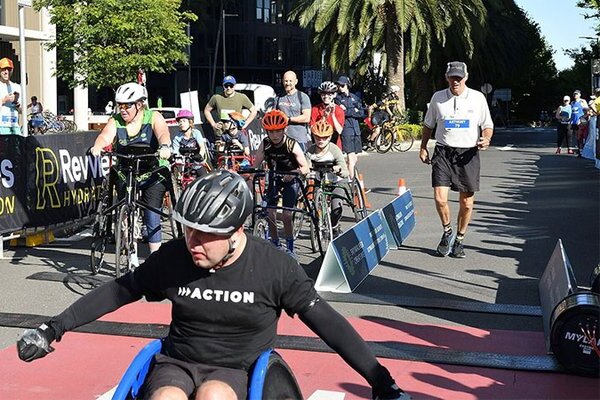
Most Australian races will tell you they welcome athletes with disability. The BBBRun at Wentworth Point on 25 October puts a number on it: wheelchair, frame-running and support-walker entries are free, at every event, every year. Against a $130 half marathon and a $100 10km, that is not a gesture — it is the entry fee for an entire category set to zero, permanently, and it tells you what the race is organised around.
The event has run since 2016 across the Bennelong Bridge between Wentworth Point and Rhodes, and its own shorthand is "run, walk, wheel". The programme reflects that literally: a half marathon at 6:50am, a 10km at 7:10am, a dedicated FrameRunning event at 8:40am, a 2km family fun run at 9:00am, and — genuinely — a walk-or-jog-with-your-dog category at 9:15am, on leash. It raises money for Wheelchair Racing Australia, which puts funds towards racing chairs, coaching and access to competition, all of which are expensive in ways that are invisible to able-bodied runners.
FrameRunning deserves a note, because most runners have never seen it. It uses a three-wheeled frame with a saddle and a chest support, no pedals, propelled by the athlete's own legs — it is for people with significant balance or coordination impairment, often cerebral palsy, and it is a competitive discipline with its own classifications, not a participation activity. Watching a FrameRunning field come through is the part of this event that changes how people think about it, and it is the reason to bring children.
As a race, it is flat, urban and fast, on closed roads and shared paths around the Parramatta River foreshore, which makes it a reasonable half marathon target on a smooth course. But that is not really why it is on this list. If you are choosing between Sydney road races in October on the basis of the course, there are faster ones. If you would rather your entry fee did something specific and legible, this is the one — and the field it produces is more varied than any other start line you will stand in this month.
Forty-one years of the same ten kilometres in north-west Tasmania

The Burnie 10 has been held on Tasmania's north-west coast every October since 1985, and it is the closest thing Australian road running has to a fixture: same town, same distance, same time of year, four decades deep. It carries prize money and attracts a genuinely fast field, and it has done for long enough that the results archive functions as a record of Australian distance running rather than a local club's history.
The programme on 25 October is short and unfussy — the 10km at 10:00am for $45, a 5km at 10:20am for $35, and an 800m kids' dash at 11:40am for $10. The late start is worth flagging because it is unusual: most Australian road races go off at dawn to beat the heat, and Burnie in late October simply does not have that problem. A mid-morning gun means you can travel in that morning, and it means the town is awake and lining the course rather than asleep.
That is the actual argument for entering. Burnie is a working port city of about twenty thousand people, and for one Sunday a year the race is the thing happening — there is a street party attached to it, the course is lined the whole way, and the crowd noise on a 10km field of this size is disproportionate. Plenty of races claim community support; this one has a town that organises its October around it.
It suits a road runner who wants a fast, flat, well-contested ten with real depth in the field — you will find someone to race whatever your pace — and it suits a family, given the 5km and the kids' dash sit in the same morning. It suits less well anyone hoping for solitude or scenery in the trail sense; this is a road race through a coastal industrial city, and its appeal is the event and the crowd, not the outlook. If you have been looking for a reason to spend a weekend on Tasmania's north-west coast, which most mainlanders skip entirely in favour of Hobart and Cradle Mountain, this is a good one.
Reading these six together, the thing they share is not difficulty or distance but a kind of confidence about the weather. Every one of them would be a worse event in February, and several would be dangerous. October's particular gift to Australian running is that it lets organisers plan for three days in a row, or a mid-morning start, or a 35km walk in the open, without building in a contingency for heat.
That will not last. By December the northern half of the country has largely stopped racing long, and the southern half has moved to early starts and shorter distances. Whatever you were building through winter has a window, and this is most of it. It is worth being a little indiscriminate about how you spend that window — the runner who only ever enters the same distance in the same month tends to be the one who cannot remember any of them afterwards.