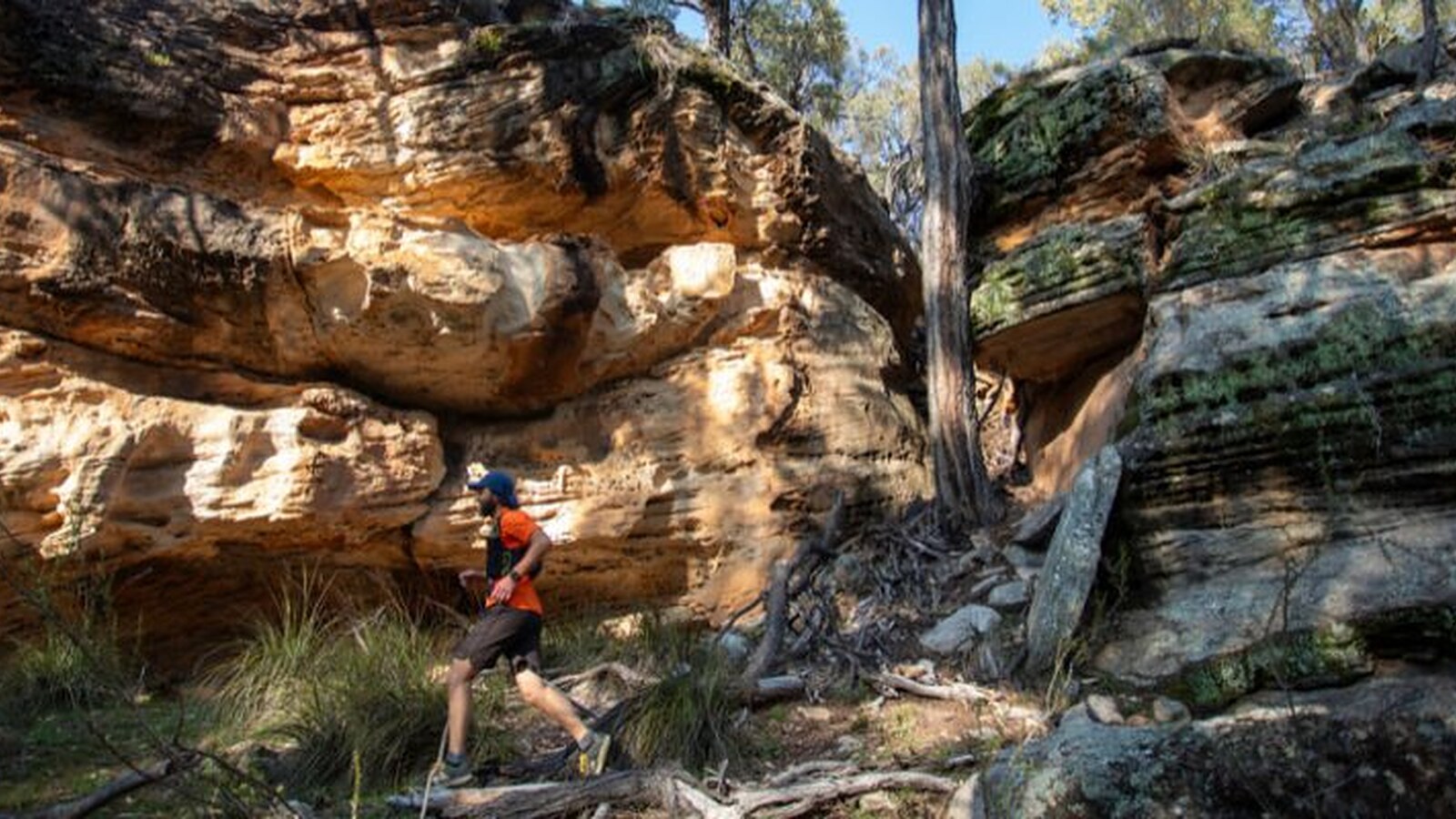
September is the month Australian running stops being one sport and becomes about six of them at once. In Hobart there is still frost on the car at seven in the morning. In Cairns the dry season is running out and everyone racing there knows it. Melbourne is into the stretch of spring where a fast 10km is a reasonable expectation rather than a gamble, and in the Perth Hills the bush is as green as it will get before the whole landscape turns the colour of a paper bag and stays that way until March.
That spread is why September is a more interesting month to look at than it first appears. A national calendar in February is mostly a list of places cool enough to run in. A national calendar in July is mostly a list of marathons. September is the one month where the country's regions are each doing the thing they are actually best at, at the same time, for entirely unrelated reasons — and the races reflect it. There is a technical trail marathon in Perth built around a climb the organisers named after what it does to your legs. There is a rainforest marathon in Far North Queensland that crosses the saddle between the state's two highest mountains. There is a three-day trail weekend in an inland New South Wales forest that exists, in part, to make more people care whether that forest survives.
What follows is seven races between the first week of September and the first week of October, one per state and territory where something genuinely worth travelling for is on. They are not ranked. They are very deliberately not all long — two of them are under 20km and one is a 4km fun run that has been held on the same lakeside path since 1984. The useful question in September is not which race is hardest. It is which one is a good reason to be somewhere, and each of these is a good reason to be somewhere.
The Perth Hills are only green for a few more weeks, and one race is built around that
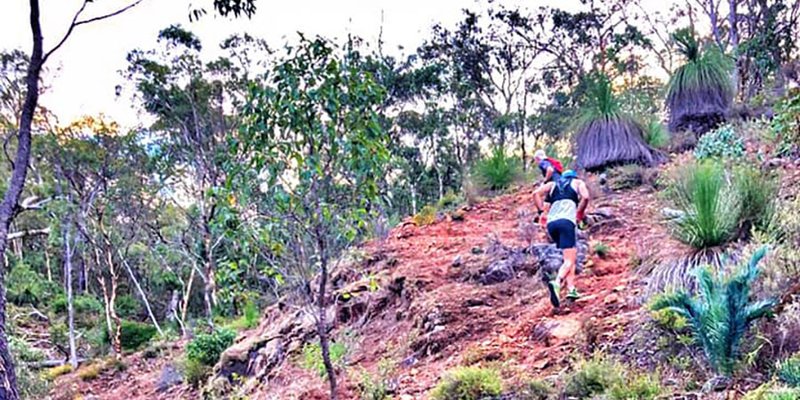
Perth's trail season is short at both ends. Run the hills in January and you are running on hot gravel through bush that has not seen water in months; run them in July and you are ankle-deep in it. The window where the Darling Scarp is green, the creeks are moving and the temperature is still sensible is roughly August to early October, and the RunningWorks 3 Valleys Marathon on 6 September sits close to the middle of it.
This is the sixth running of the event, out of the Bickley Outdoor Recreation Camp in the hills east of the city, and the marathon course has been rebuilt for 2026 with more single track and a new section taking in the Victoria Dam lookout. The other thing it takes in is a climb the organisers call the Quad Cruncher, which is one of the harder sustained ascents anyone in Perth puts in a race, and which is not something they have hidden in the fine print — it is listed on the event page as a feature. That tells you most of what you need to know about the tone here.
Four options share the venue: a marathon and a two-to-four-person team relay away at 7:00am, then the half marathon and 10km at 7:30am, with a seven-hour cut-off across the board. Entry runs $209 for the marathon, $139 for the half, $89 for the 10km and $250 for a relay team. Those are not small numbers, and it is worth saying plainly that this is a technical trail race — single track, real climbing, real descending — rather than a graded course with a nice view. If you have only run road, the 10km is the honest entry point, not the half.
What sets it apart from the other Perth Hills events is that it is run by a running shop rather than a club or a promoter, and it behaves like one: every marathon, half and relay finisher gets a medal, and every entrant gets a $50 voucher towards shoes. There is a fire pit, a barbecue and a coffee van at the finish, and showers, which matters more than it sounds after four hours in the Bickley Valley. Compared with a September road marathon in Melbourne or Adelaide, this is the opposite proposition — you will run slower than you have in years and enjoy it more.
In Far North Queensland the running season ends in September, it doesn't begin
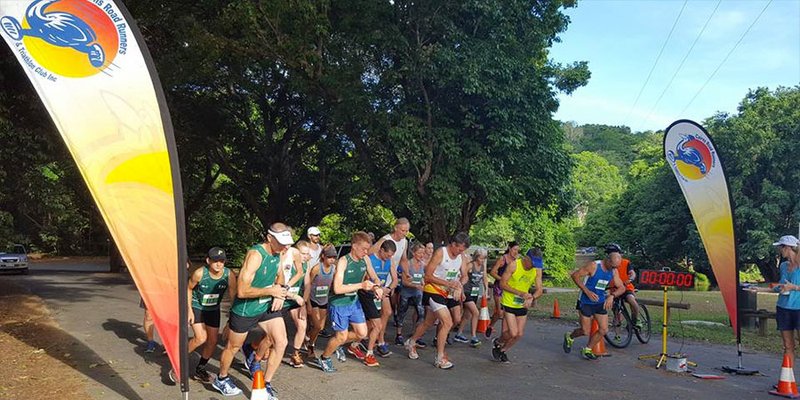
Every southern runner assumes September is the start of something. In the wet tropics it is the end. The dry season is closing out, the humidity is beginning to climb back, and the last comfortable weekends for running long in the rainforest are being used up. The Goldsborough Goldrush Trail Run on 12 September, put on by the Cairns Road Runners in Wooroonooran National Park, is one of the last of them.
Everything here runs out and back along the Goldfields Trail from the Goldsborough Valley day use area, which makes the four distances genuinely different experiences rather than nested loops. The 5km — the Nugget — stays on the flat grassy floor of the Mulgrave River valley. The Eureka 10 carries on into the rainforest on a wide, undulating earthen track. The 18km Causeway Crusade goes further again, turning at the East Mulgrave causeway. And the Goldrush Marathon follows the historic trail through the rainforest, across a series of creeks, and climbs over the saddle between Bartle Frere and Bellenden Ker — Queensland's highest and second-highest mountains — for about 1,115m of gain.
The detail that tells you what kind of race this is: there is no formal cut-off. What there is instead is a marshal at the Babinda Boulders checkpoint who packs up at 10:30am, which in practice gives marathon runners four hours to reach halfway. There is no mandatory gear list either, only a note that marathon runners should carry their own water and nutrition and be ready for technical trail past the causeway. Bottles can be refilled at the checkpoint or, failing that, in the creeks. Mobile reception is patchy. The marathon starts at 6:30am and everything else at 8:30am, and afterwards there is a barbecue brunch that runs long enough to catch the slow finishers.
This suits a self-reliant runner who is comfortable being a long way from a road without a support crew, and suits a family less obviously well — though the 5km on flat grass genuinely is a 5km on flat grass. If you are travelling for it, the camping at Goldsborough Valley is the whole point of going; the club recommends booking through Queensland National Parks early, because a marathon weekend is not the only thing filling those sites in September. Entries close at 10pm on Wednesday 9 September, which is earlier than most people leave it.
A race that exists partly to argue for the place it's run in
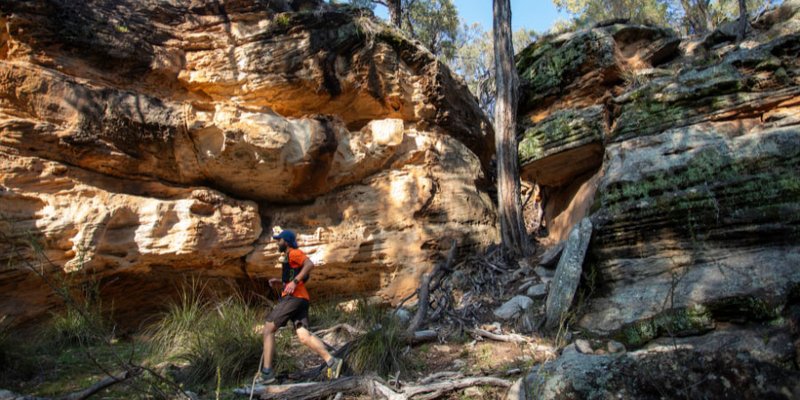
Most trail races are staged in a landscape. The Pilliga Ultra, held across three days from 18 to 20 September at Pilliga Pottery near Coonabarabran, is staged about one. It is run by For Wild Places, a not-for-profit that puts on events in places it thinks are worth defending, and the Pilliga — the largest remaining temperate woodland in eastern Australia, Gomeroi Country, sitting above ancient aquifers — is the one it was founded around. Santos has approval for a coal seam gas field of 850 wells through that forest. The event's stated purpose is to bring people there so that more of them have a personal reason to care what happens next.
That could easily produce a worthy, badly-run race. It has not. The three distances are spread deliberately across the weekend so you can enter one or all of them. The 10km goes out at 4:00pm on the Friday, with an optional 3:30pm start for hikers, 241m of climbing and a 2.5-hour limit — and a mandatory kit list of snake bandage, space blanket and head torch, which is a fair summary of what running in the Pilliga at dusk in September involves. The 50km starts at 6:00am on Saturday with 1,154m of gain, aid stations at 12.4km, 20.5km, 30km and 44.5km, a 12-hour cut-off and a qualifying requirement. The Paddy Pallin 20km, on Sunday at 7:00am, is the one most people should look at first: 576m of climbing across sandstone escarpments and grass-lined creeks, with a 5.5-hour limit. Do all three and it is called the Grand Slam — 80km and 1,971m for $350, against $80, $230 and $140 taken individually.
Two things here are not standard practice and are worth naming. Entry is complimentary for Aboriginal and Torres Strait Islander runners. And there is a free Kids' Race on the Saturday afternoon followed by an Elders Walk — about a kilometre along Dandry Creek, finishing with tea and scones and a crowd cheering. The event dropped its compulsory fundraising requirement after the local community said it was a barrier. For a race with an explicit political position, it is notably uninterested in making anyone perform commitment as the price of a start line.
Melbourne's flattest race is on a motor racing circuit, and the honesty is the appeal
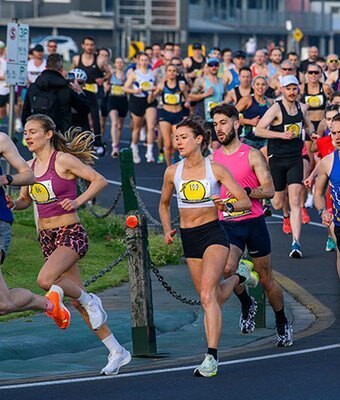
There is a particular kind of runner who spends winter building fitness and arrives in September wanting to know, precisely and without excuses, what that fitness is worth. Trail races cannot answer that question. Undulating road courses answer it badly. What answers it is a closed, flat, smooth loop with no traffic lights, no cars and no cambered gutters to roll an ankle on — which is a description of a Formula One circuit, and on 20 September the Run Prix takes over the Albert Park Grand Prix Circuit to use it as one.
The venue does the work. Albert Park's racing surface is exceptionally even by the standards of Melbourne roads, the lake keeps the whole thing flat, and because the circuit is closed for the morning there is no negotiating with intersections. Runners choose between 5km, 10km and a half marathon, all on the circuit, with race HQ at the Lakeside Stadium car park off Aughtie Drive. It is organised by Big Long Run, a small Melbourne outfit rather than a national event company, and entries close at midnight on Wednesday 16 September — earlier than the weekend-before deadline people tend to assume, and earlier still if it sells out first, which it has done before.
Who it is for is unusually clear-cut. If you have a number in your head — sub-40, sub-50, sub-90 — this is close to the ideal September course in Victoria to go and find out, and the field is deep enough that you will have people to run with at almost any pace. If you want a day out, a view, or a reason to have travelled somewhere, this is not that race; it is two hundred laps' worth of the same parkland, and it is not pretending otherwise.
The novelty is real but it is not the point, and it fades about ten minutes in. What stays is the thing a closed circuit actually gives you, which is the absence of variables. On a course like this a bad time is information rather than an excuse, and after a winter of training that is either exactly what you want or precisely what you have been avoiding. Worth knowing which one you are before you enter.
Tasmania's best short trail race asks you to catch a ferry to the start
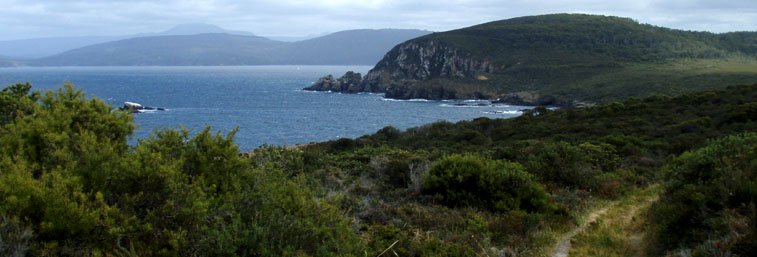
Seventeen and a half kilometres is not a distance that usually justifies a trip. The Labilladiere Peninsula Trail Run, on 20 September, is the exception, and the reason is that getting to the start line is genuinely part of the event. The race is on South Bruny Island, which means the Kettering ferry: sailings at 7:10, 7:50 and 8:30am and then roughly every twenty minutes, and a queue that builds fast enough that experienced entrants take one earlier than they think they need.
The course is a single clockwise loop of the peninsula from the Jetty Beach campground. It opens on a 4WD track down the western side, high enough to look across the D'Entrecasteaux Channel to the Southern Ranges, drops to Butlers Beach — the one place on the loop with a clear view out to Partridge Island — and comes back along the eastern shoreline on single track. It is one lap, one distance, $70, and it is capped, which the organisers say plainly enough that leaving it late is a genuine risk rather than a marketing line.
The logistics are old-fashioned in a way that is either charming or annoying depending on your temperament. Check-in happens at the start between 9:15 and 9:45am for a 10:00am gun — a late start by Australian racing standards, and one that exists because of the ferry rather than in spite of it. Endorfun, who run it, put on a small series of these around Tasmania: Tasman, Freycinet Peninsula, Russell Falls, and a winter event. None of them are big and none of them try to be.
This is a good race for a competent trail runner who wants a hard, beautiful morning without committing to an ultra, and a poor one for anyone who needs a finish chute, a timing mat and a festival village to feel like they have raced. The campground at Jetty Beach is right at the start, and staying the night before removes the ferry problem entirely — which is probably the single most useful piece of advice about this event. September on Bruny is cold, often wet, and frequently spectacular within the same hour.
Adelaide has a club that has quietly made racing cheap again
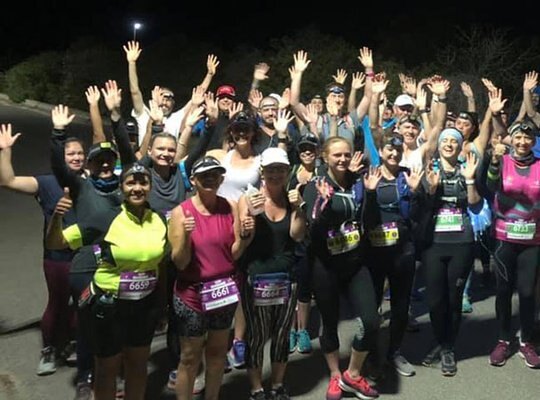
Entry fees have gone one direction for a decade. A trail marathon now routinely costs north of $200, a big-city half is $130 before the photos, and somewhere in that drift the idea of racing casually — several times a year, without planning the budget around it — quietly disappeared for a lot of people. Which is what makes the Western Coastal Running Festival at Semaphore South on 4 October worth pointing at, almost regardless of the course.
Five distances start together at 7:00am along the coastal path north-west of Adelaide: 5km at $20, 10km at $25, 15km at $30, a half marathon at $35 and 30km at $37. That is not a typo and it is not an early-bird tier. Thirty-seven dollars is the price of the longest race on the programme, on a flat, sealed, measured coastal course, with aid on the way round. There is a virtual option at $25 for anyone who cannot get there.
The organisers, Coastal Fun Runs, put on something close to eighteen events a year around the Adelaide beaches and have done for a decade, and the model is consistent: same stretch of coast, rotating start suburbs, a colour attached to most editions for whichever cause it is supporting — RUN PINK, RUN TEAL, RUN GOLD, RUN RED. Their tagline is "running with purpose", and between events they run free monthly group runs, usually 5km finishing at a coffee shop. It is a club culture wearing an event company's clothes.
The trade-off is honest and worth stating. This is a flat out-and-back-ish path along a metropolitan foreshore, not a destination course; you are running past houses and dunes with the Gulf on one side, and by 25km the scenery has made all the arguments it is going to make. What you get instead is a genuine 30km time trial in early October for less than the cost of dinner, in a field that turns up week after week and knows each other. For an Adelaide runner building towards a summer marathon, or anyone who has been priced out of racing regularly, it is the most useful entry on this list.
Canberra's least ambitious race has outlasted almost everything around it
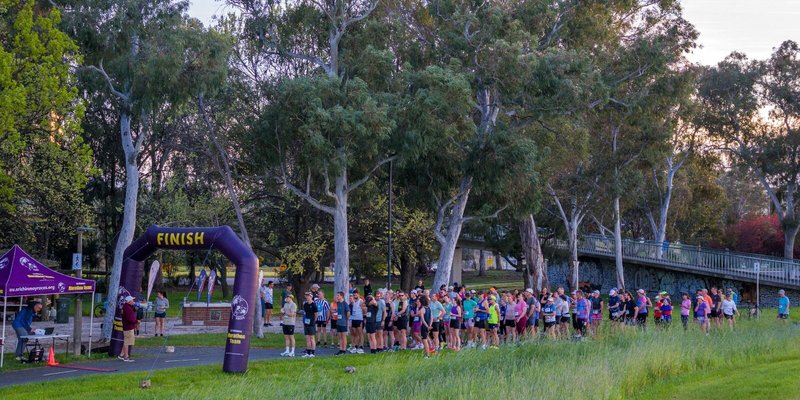
The Sri Chinmoy 10km and 4km Fun-Runs have been held on the cycle path along the northern shore of Lake Burley Griffin, starting and finishing at Acton Park, since 1984. Twice a year, every year, for four decades. This one falls on Labour Day, Monday 5 October, with the 10km away at 8:30am and the 4km five minutes later, at $25 and $15 respectively.
Nothing about it is designed to impress you, and that is the interesting part. The course is the signposted permanent Sri Chinmoy 10km recreational running route — a measured loop that exists on the ground all year, that Canberrans use for training whether or not there is a race on, and which the event simply borrows twice annually. The Marathon Team behind it was founded in 1977 and is one of the largest organisers of endurance events anywhere, which sits oddly with the scale of this particular morning: on-the-day entry and bib collection between 7:30 and 8:20am, medals for the top placegetters, and a pancake breakfast for everyone afterwards.
The quirk worth knowing before you enter is the bib system. This series uses permanent Canberra race numbers — you buy a bib once and it is yours across every Sri Chinmoy race in the city, for years. The corollary, which the organisers put in capital letters, is that if you own one and forget it, you get no result. If you are buying one with your entry, you need to be there by 8:00am to collect it. It is an administrative arrangement from another era that has survived because it works for the people who turn up regularly, which is most of the field.
This is the race on the list for someone who does not want a project. There is no travel, no kit list, no qualifying time, no cut-off worth worrying about, and no coach's plan that this either validates or ruins. It is a flat 10km beside a lake on a public holiday with pancakes at the end. For a first-time 4km entrant, or a parent bringing children, that is close to an ideal introduction to racing — and for everyone else it is a reminder that a running event does not have to be an undertaking.
Something worth noticing about this month's list is how little the seven events have in common. A $37 half marathon on an Adelaide bike path and a $350 three-day slam through a threatened forest are not competing for the same runner, and neither is really competing with a pancake breakfast in Canberra. The instinct to rank them — hardest to easiest, best to worst — falls apart on contact with what people actually want out of a Sunday morning.
September is a good month to notice that, because it is the month the excuses run out. The weather is not the problem anywhere in Australia right now, and the winter you have just spent running in the dark was for something. Whether that something turns out to be a personal best on a closed motor racing circuit, or a rainforest marathon nobody you know has heard of, or catching an early ferry with a race number in your pocket, is entirely a question of what you were training for. Most of us are not honest about the answer until we have to enter something.